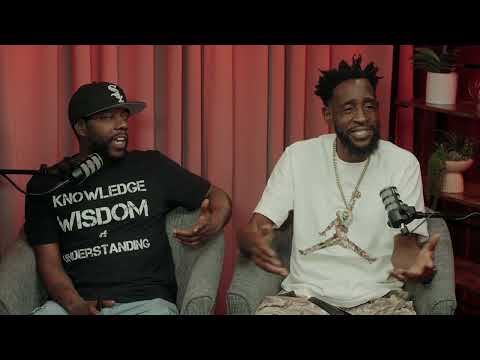
Watch the full conversation
Keefe D, 2Pac and Billy Garland
Episode overview
A current case with deep hip-hop history
In this episode of The ReeL Hip Hop Show, J-Reel and the panel discuss the Keefe D trial connected to the killing of Tupac Shakur. They revisit the accounts and public statements that have kept the case in hip-hop conversation for decades, including the tension between earlier claims and the defense position that some remarks were made to sell books or entertain an audience.
The conversation then turns to J-Reel's own discussions with William “Billy” Garland, Tupac's father. J-Reel asks listeners to look beyond the familiar public narrative and consider a father's grief, the family's experience and the human cost behind a case that is often discussed as legend.
This is cultural commentary from the hosts, not a legal finding. Allegations and disputed claims discussed in the episode should be understood in the context of the ongoing court process.
Written episode summary
The trial, the family and the story behind the story
J-Reel opens by placing the trial almost thirty years after Tupac's death. The hosts examine why the case is reaching a courtroom now, discuss Keefe D's earlier statements and question how those statements should be weighed against later attempts to recast them. Their focus is the long gap between what the public believed it knew and what the legal system is now testing.
At the center of the episode is a more personal perspective. J-Reel says he has spoken directly with Billy Garland and describes him as a father whose loss is often pushed aside by the larger mythology surrounding Tupac. The panel talks about how one famous person's account can become the only version fans hear, and why family history deserves more care than a simple hero-or-villain narrative.
The discussion widens into Tupac's artistic development: the political edge of his early work, the regional influences that shaped his sound and the sharper street image associated with his Death Row Records period. The hosts also revisit the business story around Interscope, Death Row and Tupac's release from prison, challenging the simplified version that Suge Knight alone rescued him.
Near the end, the hosts address the circulation of graphic courtroom and autopsy images. Their point is larger than a single celebrity: public interest does not erase the dignity of a deceased person or the pain of relatives who may encounter those images again. The episode ultimately connects law, music history, family, media and memory—the same forces that keep Tupac's life and death central to hip-hop culture.
This summary was prepared from the episode's auto-generated captions and edited for clarity. Viewers can open “Show transcript” beneath the video on YouTube to follow the full conversation word for word.